

September 2026 | Market Update



Manufacturing Gains, Resin Markets Remain Mixed
From Chuck Hoop, Business Director, Star Plastics
See what’s inside:

- U.S. Manufacturing Gains Momentum
- China’s Booming Auto Industry
- Diesel prices surge
Market Supply and Pricing Overview
On the overall market pricing front: The engineering resins marketremains uneven, with pricing strength driven more by costs and supply factors than by a broad demand recovery. Polycarbonate is the ‘bright spot,’ while ABS, nylon, and PBT continue to face weak automotive and industrial demand. Polypropylene is more mixed, with regional differences becoming increasingly important.
- Polycarbonate (PC) is the strongest market. North American general-purpose PC averaged another $0.05/lb increase and overall decent demand. Electronics, medical, hybrid vehicles, data centers, robotics, and other higher-growth markets are providing support, while conventional automotive remains soft. Asian PC also strengthened, although much of the move reflects higher costs, maintenance outages, and seasonal restocking rather than a broad recovery.
- ABS remains challenged. North American prices held but demand is still soft across transportation, construction, and appliances. Electronics are comparatively healthier, but there is little indication of a meaningful near-term rebound. Asian ABS prices increased modestly, driven mainly by styrene/feedstock inflation and inventory replenishment, not stronger underlying consumption.
- Nylon pricing is rising despite weak demand. Nylon 6 moved sharply higher in North America to about 3-7 CPP, while nylon 6,6 reached roughly 5 CPP. These increases are primarily cost-driven, with automotive continuing to be the biggest ‘drag’ and unlikely to provide much near-term relief. Asia shows a similar demand picture, although strong Chinese nylon export growth is a notable positive. Prices could soften into September and Q4 as feedstock pressure eases.
- PBT remains one of the weakest North American markets. Pricing was essentially flat with stagnant demand and little improvement in automotive purchasing. Asia is somewhat healthier, supported by seasonal manufacturing activity and especially strong Chinese exports, but domestic buying remains largely hand-to-mouth.
- Polypropylene is mixed and highly regional. North American engineering PP grades edged higher a few pennies, while commodity PP moved lower as ample supply and disappointing exports limited pricing power. China remains weak across injection molding, pipes, nonwovens, and compounding, while South and Southeast Asia are more attractive markets, prompting suppliers to redirect volumes toward better-margin destinations.
Bottom line: PC continues to outperform the engineering resin materials, helped by the upside of electronics, medical, electrification, and data-center-related applications. Most other resins remain constrained by weak demand in automotive and general industrial sectors. Near-term price increases should therefore be viewed primarily as cost- and supply-driven rather than a broad demand recovery, with Asia increasingly relying on exports to balance excess domestic capacity.
Lumber Prices Surge Despite Housing Slump
Lumber prices have climbed to their highest level in four years, but this time it is not because of a housing or remodeling boom. Home sales are slowing and renovation spending is losing momentum, while lumber supplies have tightened. Higher duties on Canadian lumber, a 10% U.S. softwood-lumber tariff and reduced imports have limited available supply. At the same time, weak prices last year forced sawmills across North America to cut production or close, creating an even tighter market this summer.
For the plastics industry, higher lumber prices could create mixed results. More expensive wood may increase construction costs and further pressure housing demand, which could reduce demand for plastics used in windows, siding, flooring, insulation, piping and appliances. On the other hand, higher lumber costs could make plastic and composite alternatives more attractive in products such as decking, trim, fencing and other building materials where durability and lower maintenance can help offset the higher upfront cost. Either way, costs are moving up and this seems to be a long-term proposition. Learn more.
US manufacturing gains momentum
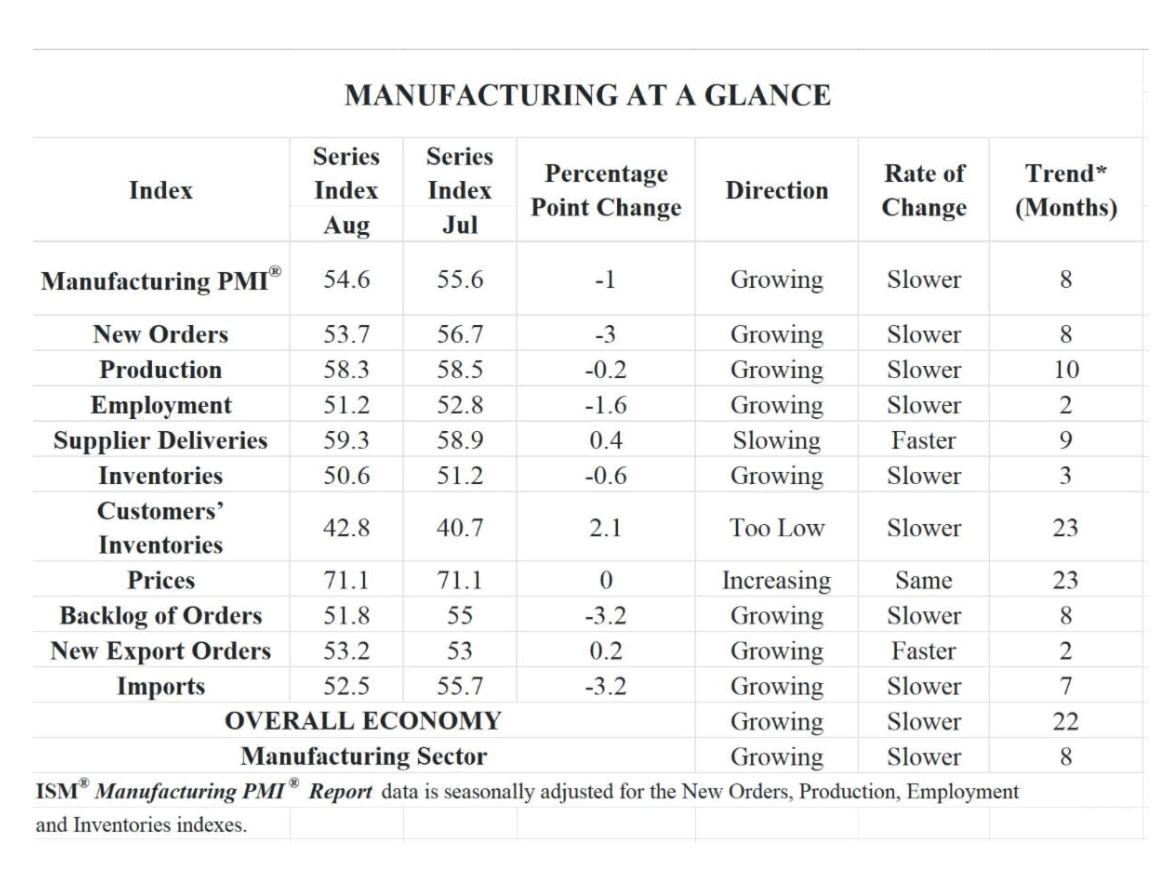
In an early August article, Manufacturing Today picked up on an article from Reuters. In summary, U.S. manufacturing had its strongest month in four years in July, with the ISM Manufacturing PMI rising to 55.6—its highest level since May 2022 and the seventh straight month of expansion. The improvement was broad-based, with stronger production, new orders, hiring, exports and order backlogs. Low customer inventories could also keep manufacturers busy as companies begin restocking.
The outlook is encouraging, but manufacturers still have some challenges to manage. As we all know, material and transportation costs remain high, supplier lead times are longer, and tariff and trade uncertainty continue to make purchasing and investment decisions more difficult. Overall, manufacturing appears to be entering a stronger growth phase, but companies will still need to carefully manage inventory, suppliers, staffing and costs during the second half of 2026. View details.
Subscribe to Star’s Monthly Market Updates
China’s Booming Auto Exports Test Shipping Industry
A Wall Street Journal article highlights a longer-term issue developing from China’s rapid growth in vehicle exports, and the impact could extend well beyond the auto industry. China has gone from exporting fewer than 600,000 cars and vans in 2019 to potentially shipping as many as 10 million vehicles annually. That growth is being driven by excess manufacturing capacity, intense competition among more than 100 Chinese auto brands, and weaker domestic demand. The immediate problem is transportation capacity. Specialized roll-on/roll-off ships used to move vehicles are reportedly booked 5 years in advance, while charter rates have jumped about 65%. Even after the global car-carrier fleet expanded roughly 40%, capacity is still struggling to keep up. Some manufacturers have resorted to loading vehicles into regular shipping containers just to get them into overseas markets.
The longer-term impact could be significant. As Chinese automakers consume more ocean freight capacity, transportation costs will remain elevated for companies shipping products between Asia, Europe, and the Americas. Port congestion and vessel availability could also become more unpredictable, particularly at ports handling large volumes of automobiles. For the plastics industry, this is worth watching closely. Higher ocean freight rates and tighter shipping capacity could raise the landed cost and potentially affect availability of Asian resins, additives, pigments, molds, tooling and components. Continue reading.
HMI Key Findings – August 2026
Direct from the National Association of Home Builders, the Housing Market Index (HMI) for August show signs of cooling. Each month, the HMI depicts overall builder sentiment toward housing marketconditions on a scale ranging between 0 and 100. A higher reading (>50) is an indication that the majority of builders feel confident about the current and near-term outlook for housing. Lower readings signify less optimism among builders.
Builder confidence in the market for newly built single-family homes inched up one point to 35 in August.
Here are the readings for the three HMI indices in August:
- Current sales conditions increased two points to 39.
- Sales expectations in the next six months held steady at 43.
- Traffic of prospective buyers held steady at 23.
Signs of Market Cooling – The latest HMI survey also revealed that 35% of builders cut prices in August, down from 37% in July, and unchanged from June (35%). The average price reduction was 6% in August, the same rate as the previous month. The use of sales incentives was 63% in August, unchanged from the previous month. Get the details.
NAHB also published a mid-August report “Housing Starts Retreat on Market Headwinds.” Housing construction slowed sharply in July as builders continued to deal with high financing costs, rising material and fuel expenses, labor shortages, and economic uncertainty. Total housing starts fell 12.4% to an annualized rate of 1.24 million units. Single-family starts dropped 9.9% and were down 15.7% from a year ago, while multifamily starts fell 16.8%. The slowdown reflects ongoing affordability concerns with elevated mortgage rates keeping many buyers on the sidelines and higher construction costs making it harder for builders to deliver homes at attainable prices. Regional performance was mixed, with year-to-date starts up in the Northeast but down in the Midwest, South, and West. One encouraging sign is that building permits moved higher in July. Overall permits increased 5%, including gains in both single-family and multifamily projects. That suggests there could be some improvement in future construction activity, even though builders remain cautious. For now, the market continues to face a difficult mix of weak demand, high costs, and limited housing supply. Discover more.
Diesel Prices Surge
In late August, FreightWaves reported what we’re all seeing at the pumps today. Benchmark diesel price is now highest since war began. Diesel prices just hit a major milestone, with the benchmark used for most fuel surcharges climbing to its highest level since the conflict with Iran began in early March. The DOE/EIA weekly average jumped nearly 20 cents to $5.652 a gallon and is up almost 40 cents in just two weeks. There may be some relief ahead, though.
Wholesale diesel prices dropped sharply during the week of August 24th which is the week after Treasury Secretary Scott Bessent suggested the U.S. may lean more on economic pressure against Iran instead of renewed military action. Diesel has also been rising much faster than gasoline. Gas prices are basically flat compared with a month ago, while diesel is up more than 30 cents (which makes a big difference when you get 8 miles to the gallon). That’s partly because diesel is facing extra supply pressure from attacks on Russian refineries and disruptions to Middle Eastern crude supplies. Another big question is how much oil is actually moving through the Strait of Hormuz. Estimates vary widely, from around 6–7 million barrels a day on average to occasional spikes near 10 million, adding even more uncertainty to fuel prices. This is supported by articles from the US Energy Information Administration, the IEA, Oil marketreport for August 2026, and Argus, a leading energy authority. Take a look.
Inflation Concerns Put Rate Hikes Back in Focus
In late August, AP reported Fed Chair Warsh signals rate hikes may be needed with inflation still elevated. Federal Reserve Chair Kevin Warsh signaled a more hawkish monetary-policy stance, warning that inflation remains too high despite recent signs of cooling. In his first major address at the Fed’s annual Jackson Hole conference, Warsh emphasized that recent data has not convinced him that underlying inflation is moving decisively toward the Fed’s target. Warsh indicated that additional interest-rate increases may be necessary in the coming months unless inflation shows clearer and sustained improvement. His comments represent a stronger commitment to inflation control than his previous public statements and could reshape market expectations for the direction of U.S. interest rates. See the full story.
Subscribe to Star’s Monthly Market Updates
Inflation Fears Weigh on Consumer Confidence
The last Friday of the month, the University of Michigan publishes its “Consumer Sentiment Report,” and it reported U.S. consumer sentiment weakened further in August, falling about 6% from July and 11% from a year earlier, according to Surveys of Consumers from Director Joanne Hsu. The decline was broad-based across political groups and was especially pronounced among Republicans, older consumers, lower- and middle-income households, and consumers without stock holdings.
Persistent inflation concerns remain the dominant pressure on sentiment. Consumers expect the Iran conflict and broader policy uncertainty to contribute to higher gasoline prices, while worries are increasingly spreading beyond household finances to the broader economic outlook. Expectations for business conditions deteriorated sharply, with the one-year outlook falling 10% and the five-year outlook dropping 13%. Renewed trade tensions could further weaken confidence. Inflation expectations eased modestly but remain elevated. Year-ahead expectations declined to 4.0% from 4.2% in July, still well above the 3.4% recorded in February and all 2024 readings. Long-term inflation expectations remained at 3.3%, above the 2.8%–3.2% range seen during 2024. Check it out.
Manufacturing Momentum Could Boost Plastics Demand
Plastics Today published an article by Plastics Industry Association Chief Economist Perc Pineda, Ph.D., which supports that manufacturing growth could boost plastics demand in second half of 2026.
U.S. manufacturing has gained momentum in 2026, creating potential upside for plastics demand, but the recovery remains uneven. Pineda says the outlook hinges on three factors: investment in technology and equipment, expansion of domestic manufacturing capacity, and maintaining global competitiveness. Tariffs may support reshoring over time, but they can also raise input costs and slow investment. The second half of 2026 will help determine whether recent gains signal a broader manufacturing expansion or only a modest improvement amid a difficult structural transition. Explore the details.
Subscribe to Star’s Monthly Market Updates